Dream Lake & Hallett Peak, Rocky Mountain National Park
- The trail is open year-round and worth visiting in any season. Winter delivers a snow-capped Hallett Peak and welcome solitude on one of the park's busiest warm-weather trails, while the stretch between Nymph Lake and Dream Lake fills with wildflowers through the summer months.
- The Dream Lake Trail covers 2.2 miles out and back with 425 feet of elevation gain, taking about 1 to 1.5 hours to complete. The alpine lake water runs clear enough to spot cutthroat trout, and Nymph Lake along the way is covered in lily pads through summer.
- Hikers looking for more vertical can push all the way to the 12,718-foot summit of Hallett Peak, where views open up in every direction. Getting there requires some scrambling and off-trail travel in the alpine zone, following the Flattop Mountain Trail to Flattop's summit then navigating by cairns the rest of the way.
- The lake reads well for photography both at sunrise and sunset. At sunrise the light comes from behind you and early arrivals can catch alpenglow on the peaks, while at sunset the sun drops behind Hallett Peak.
- The hike begins from the Bear Lake Trailhead, located at the end of Bear Lake Road, 9 miles from the turn-off at Highway 36. Parking fills by early morning and roads get congested, so the park's free shuttle bus is the practical way in, running to the trailhead and avoiding the parking crunch.
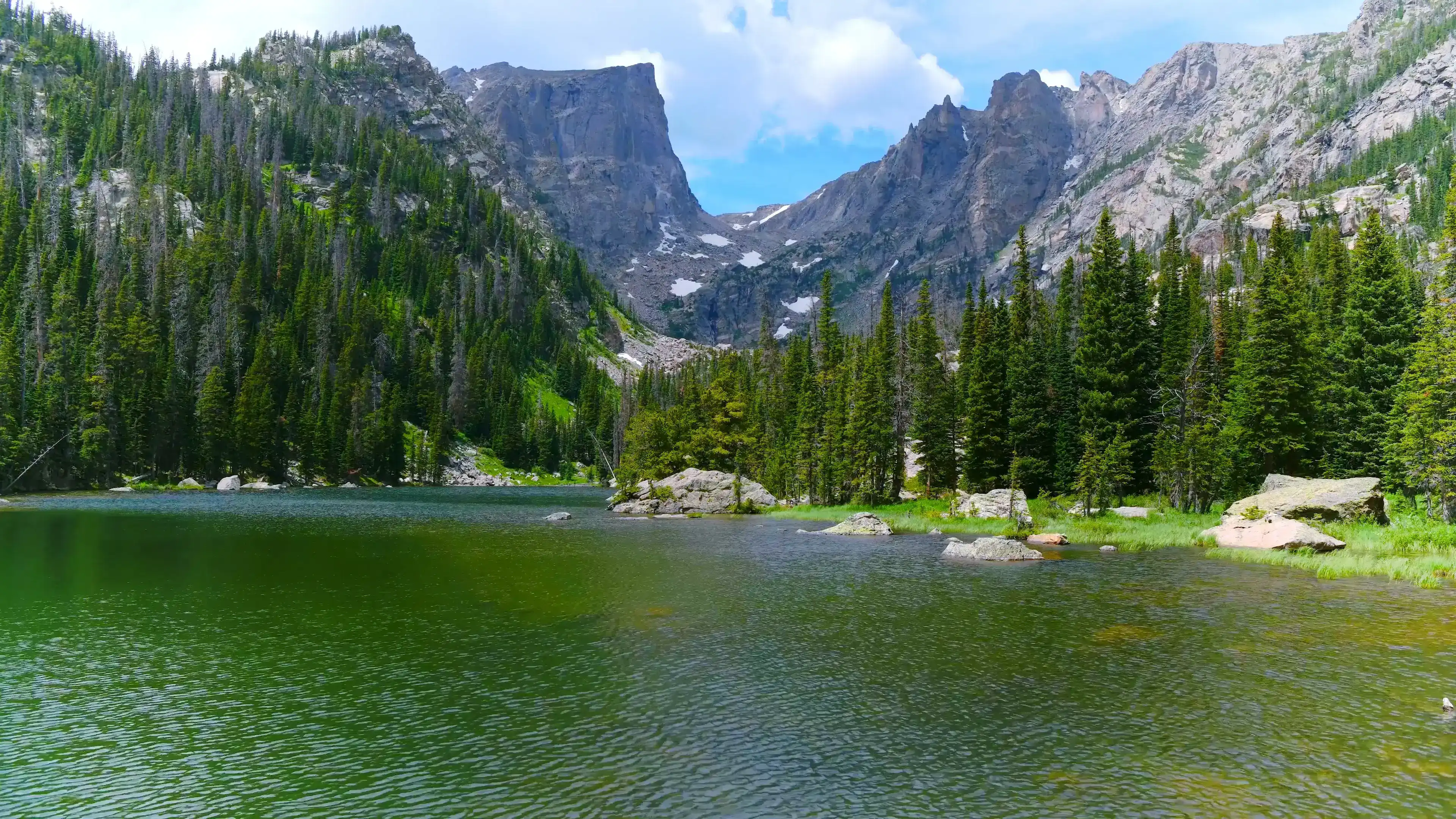
Dream Lake sits at roughly 9,905 feet above sea level on the east side of the Continental Divide, where Tyndall Creek flows down from a small glacier near Hallett Peak and fills the lake before continuing downhill. Long and narrow, the lake frames Hallett Peak at its far end, and on a calm morning the water mirrors the granite face of the peak in its surface.
Hallett Peak rises to 12,713 feet and dominates the western skyline from shore. Between Hallett and Flattop Mountain sits Tyndall Gorge, with the Tyndall Glacier faintly visible from this angle. The scale takes a moment to register. The pale gray granite cliffs catch morning light differently than the dark green subalpine forest below them, creating a distinct color boundary that runs the full width of your field of view.
The subalpine ecosystem here sits below treeline, generally between 9,000 and 11,000 feet in Rocky Mountain National Park. Around Dream Lake, Engelmann spruce and subalpine fir are common, while lodgepole pine is more common in lower and previously burned sections of the corridor. In summer, bluebells grow around the inlet cascades above the lake and wildflowers fill the meadow sections between Nymph and Dream Lake.
The lake water itself is clear enough that you can often see cutthroat trout moving through it. Yellow bellied marmots move through the boulder fields above the shoreline, and elk graze in the meadows below. The exposed lakeshore is subject to steady wind, especially in the afternoon, carrying the cold of the snowfields above even in midsummer.
Getting to Dream Lake and Hallett Peak
The hike starts at the Bear Lake Trailhead, located at the end of Bear Lake Road, 9 miles from the turn off at Highway 36. The trail begins next to the ranger station at the west end of the Bear Lake parking lot. Take the left turn just a few steps past the ranger station. At 0.5 miles you arrive at Nymph Lake. From there, at roughly 1.1 miles from the trailhead you reach the junction for the trail that leads to Lake Haiyaha. Turn right and walk the short distance to the foot of Dream Lake. The full out and back covers 2.2 miles with an elevation gain of 425 feet.
Due to the extreme popularity of the area, consider using the free park shuttle to reach the trailhead during peak tourist season.
When to go for the best light
Sunrise is the move here. At sunrise, the sun comes up behind you and if you're early enough, alpenglow lights up the peaks. At sunset, the sun sets behind Hallett Peak. Early morning hikes are not only more secluded but the lake is also often calmer, mirroring Hallett Peak in its crystalline waters.
Sunsets in Rocky are not as reliable as sunrise. The standard summer weather pattern is blue skies in the morning with building clouds and a potential thunderstorm in the afternoon. Plan to be on trail well before first light so you reach the shore as the sky opens up.
Fall colors typically begin in the tundra during the first week of September and work their way down, hitting the aspen around Bear Lake by about the third week of September making it one of the most rewarding times to visit.
Small details worth stopping for
Three things to look for on the trail:
Tyndall Gorge and its glacier. From the east shore, you get views of 12,713 foot Hallett Peak and 12,324 foot Flattop Mountain. In between the two mountains is the Tyndall Gorge, with the Tyndall Glacier just barely visible from this angle.
Krummholz zone on the upper trail. At 2.4 miles and an elevation of roughly 11,000 feet, the trail emerges above the treeline and enters the scrub pine / krummholz zone. Above Dream Lake Overlook the trail begins to climb through timberline. The trees and shrubs through the region are stunted and finally disappear as they give way to alpine tundra.
Yellow pond lilies at Nymph Lake. During the summer this little pond is filled with lily pads, often with big yellow flowers. It's easy to walk past on the way to Dream Lake, but worth a pause.
Insider Tips
Skip the main overlook and walk the south shore
Most visitors stop at the first clearing on the north end of Dream Lake, right where Hallett Peak fills the frame. For a quieter composition, follow the trail around to the south side of the lake where exposed rocks along the shoreline give you natural foreground elements and a slightly lower angle on the peak. Early morning works best here since the water is calm and the light hits the east face of Hallett directly.
Layer up and bring grippy footwear
Even in summer the lake sits above 9,900 feet and an afternoon wind off the Continental Divide cuts through fast. Pack a windbreaker or a midlayer you can tie around your waist on the way up. The trail from Bear Lake to Dream Lake is rocky and uneven in sections so sturdy trail shoes or light hiking boots will serve you better than sneakers, especially if the rocks are wet or icy.
Fuel up at Kind Coffee in Estes Park
Estes Park sits about 35 minutes from the Bear Lake Trailhead and is the last real town before you enter the park. Kind Coffee at 470 E Elkhorn Ave roasts their own certified organic beans and has riverfront seating along the Big Thompson River out back. Grab a breakfast burrito and a latte here before you hit Bear Lake Road.
Nearby Hikes
Trails worth your time when you're in the area.
Nymph, Dream & Emerald Lake trail
This is the most popular trail in the Bear Lake corridor, linking three alpine lakes in quick succession. Starting at Bear Lake Trailhead, the route climbs steadily past lily pad-covered Nymph Lake and on to Dream Lake, where Hallett Peak (12,713 ft) rises directly above the water. Continuing another 0.6 miles brings you to Emerald Lake, which sits at the base of both Hallett Peak and Flattop Mountain with Tyndall Glacier tucked between them. The upper section above Dream Lake is the steepest stretch, gaining about 200 feet over wooden steps carved into the rock.
View on hikespeak.comHallett Peak via Flattop Mountain trail
The route to 12,718-foot Hallett Peak starts at Bear Lake Trailhead and follows the Flattop Mountain Trail up the eastern slope of the Continental Divide. The grade is steady and moderately strenuous through the tree line, then opens into sweeping tundra with views of Longs Peak, Bierstadt Lake, and the Glacier Basin below. At Flattop Mountain's summit, a faint rocky trail continues southwest to Hallett Peak. The final push crosses exposed, rugged terrain with 360-degree views from the top.
View on nps.govAlberta Falls
This short out-and-back hike from the Glacier Gorge Trailhead is one of the most visited walks in the park. The trail moves through aspen groves and pine forest before reaching Alberta Falls, a 30-foot waterfall where Glacier Creek drops through a narrow granite chute. It is a natural stopping point for families and visitors acclimating to elevation, and it also serves as the first landmark on longer routes to Mills Lake, The Loch, and Sky Pond.
View on nps.govMills Lake
Starting from the Glacier Gorge Trailhead, this hike passes Alberta Falls before climbing into the broad open terrain of Glacier Gorge. At 2.6 miles the trail reaches Mills Lake, named for Enos Mills, one of the park's founding figures. The eastern shore looks out toward the Keyboard of the Winds, Pagoda Mountain, and Chiefs Head Peak, with Longs Peak visible in the distance. The lake sits just below 10,000 feet and is one of the few in the park where fishing is permitted.
View on nps.govSky Pond via Glacier Gorge trail
This full-day hike from the Glacier Gorge Trailhead follows the same path as Mills Lake before continuing up through The Loch and past Timberline Falls. To reach Sky Pond, you scramble up the rocky face alongside the falls, which requires sure footing and some exposure. The lake sits at 10,900 feet inside a granite cirque, enclosed on three sides by sheer cliff walls with the jagged spires of The Sharkstooth rising to the south. The trail can hold snow well into early summer at the higher elevations.
View on alltrails.comEmbroidered Rocky Mountain National Park Hat - 100% of profits donated to National Parks
100% of the profit from every hat goes straight to the National Parks. Not a round-up. Not a percentage. The whole margin.
Shop this hatEstimated delivery Oct 19 to Columbus, OH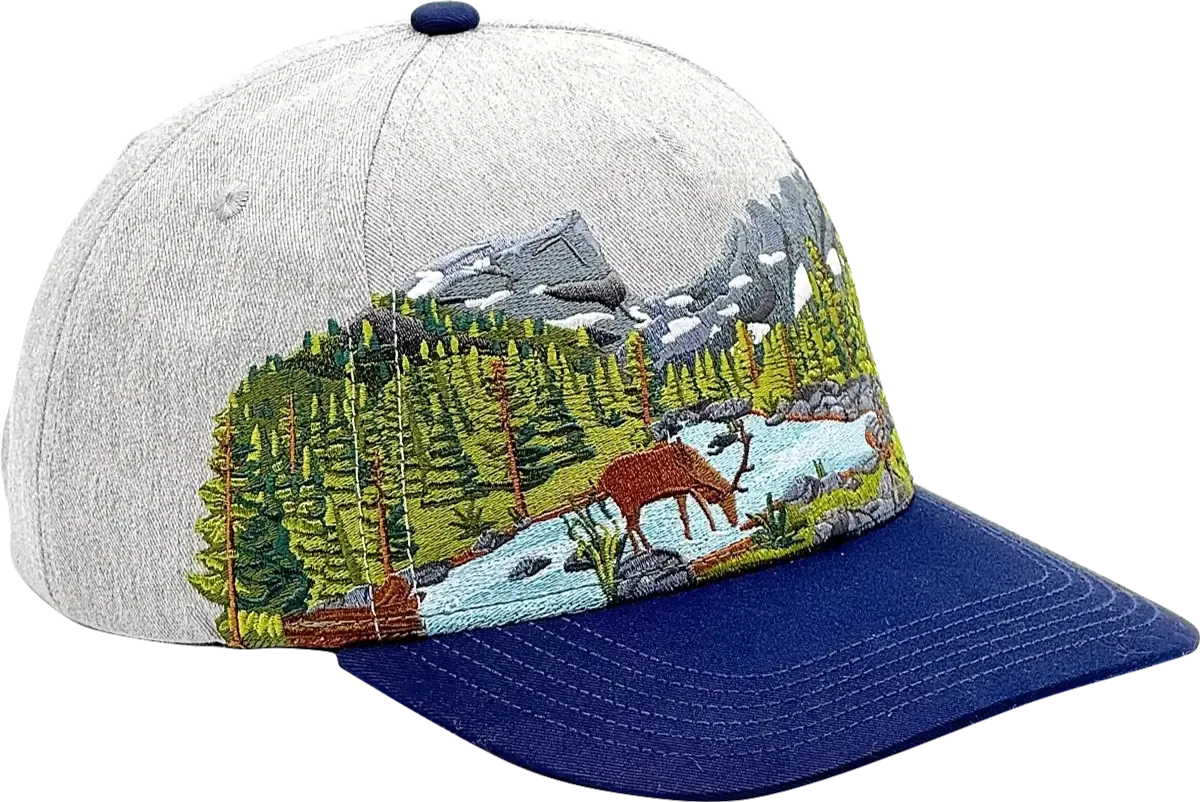
Protecting Rocky Mountain
Rocky Mountain National Park protects more than 265,000 acres, 95% of which is designated wilderness. Dream Lake and Hallett Peak sit squarely within that protected core, where alpine tundra covers roughly a third of the park and requires close attention to keep this fragile ecosystem intact. The threats here are real and ongoing. Climate change is transforming sensitive alpine zones, and the same pollution sources driving it are degrading air and water quality within the park. If nitrogen contamination worsens, wildflowers could disappear and algae could bloom in alpine lakes, endangering native fish. Tundra plants are fragile to human contact, and repeated footsteps damage them and expose soil to erosion. Protecting a place like this matters because high elevation ecosystems provide water resources for communities near and far, along with habitat for a diverse and unique variety of plants and animals.
That's exactly why Rainier Hat Co. exists. We don't just sell hats; we act as a funding vehicle for the parks that need support to keep doing this work. When you pick up our Rocky Mountain National Park Hat, 100% of the profit goes directly to the National Parks as a donation. It's a straightforward way to put your purchase to work in a place that earns it.