Watchman Peak, Crater Lake National Park
- The Watchman Peak Trail is generally most accessible in summer, though snow can remain into early July and seasonal road access changes with conditions.
- Sunset and moonrise are the main reasons to hike this trail, and the National Park Service notes that it can be especially crowded near sunset.
- A historic stone fire lookout built in 1932 sits at the summit. It is no longer staffed, but it remains part of the park's cultural landscape.
- The 1.6 mile round trip trail gains about 420 feet, making it a short but steady climb to a high viewpoint.
- Reach the trailhead from the Watchman Overlook parking area on West Rim Drive, then follow the signed trail south toward the summit.
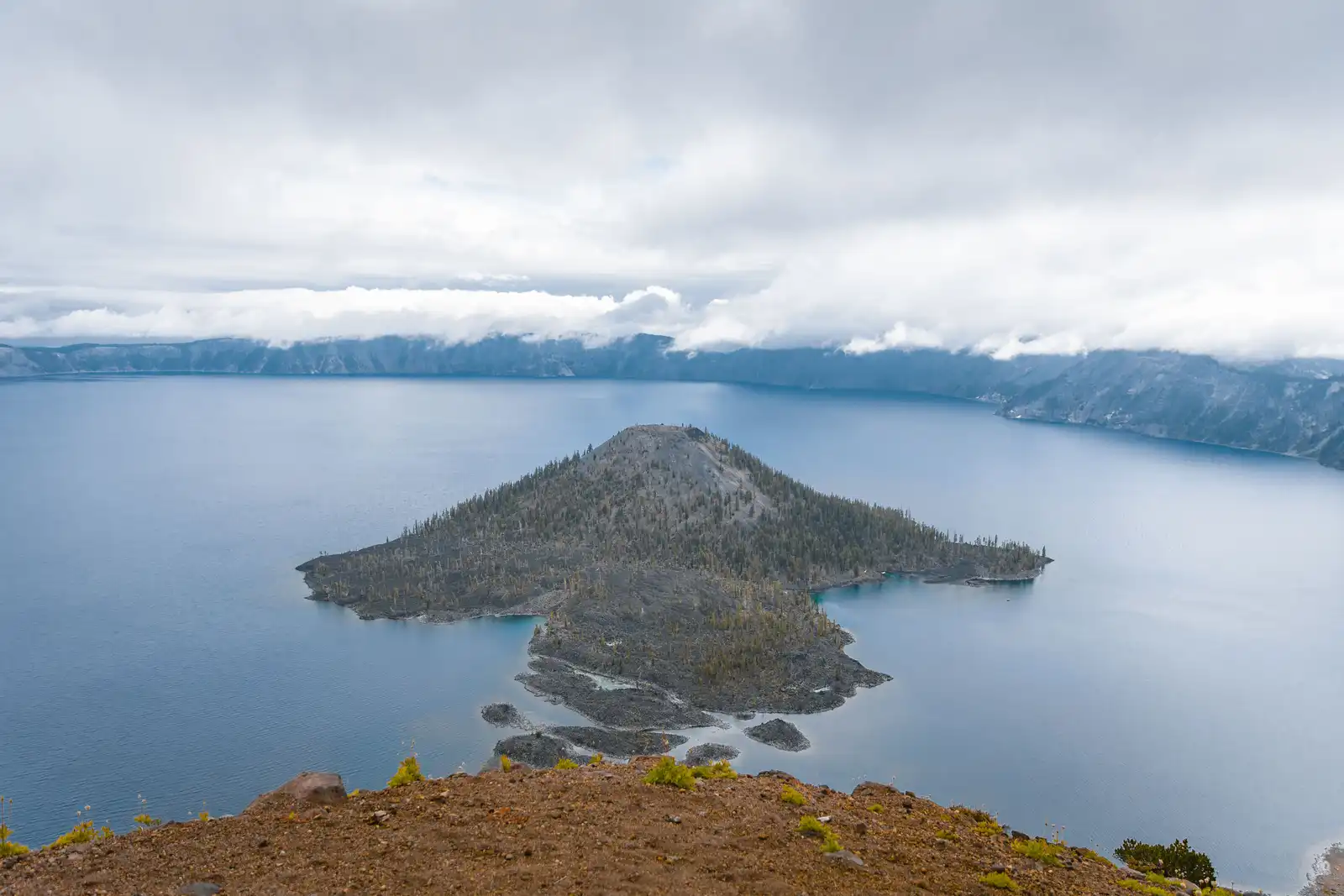
Standing on Watchman Peak, the caldera opens below in a blue that shifts with the angle of light, from deep indigo near Wizard Island's steep sides to a paler turquoise where sunlight reaches shallower water close to shore. That color comes from depth and clarity, since Crater Lake fills only with rain and snowmelt and no river carries sediment into it. Wizard Island rises from the caldera floor as a cinder cone, a reminder that volcanic activity continued here after Mount Mazama collapsed roughly 7,700 years ago.
The scale takes a moment to register. Caldera walls drop nearly 2,000 feet from rim to water, and across that open span Wizard Island looks smaller than its actual height of over 700 feet above the lake surface.
Wind moves across this exposed summit almost constantly, and it has shaped the whitebark pines and mountain hemlocks growing low and twisted near timberline. These trees mark the edge where forest gives way to bare rock and pumice, a boundary set by wind, snow load, and a short growing season. Clark's nutcrackers work through whitebark pine cones here, caching seeds in the ground, a relationship that helps the trees regenerate after fire or disturbance.
In summer, alpine flowers like Davidson's penstemon and western pasqueflower push up through thin volcanic soil between the rocks, adding small patches of purple and white to a landscape mostly gray and green. Up here, color, wind, and a few tough plants mark ground still recovering from an eruption.
Getting to the trailhead
Park at Watchman Overlook on West Rim Drive, then follow the signed trail south from the parking area toward the summit. The trail climbs about 420 feet over 1.6 miles round trip and follows a steady grade to the historic lookout.
The route is short, but the exposed upper slope and elevation can slow the pace. Carry water and give yourself time to walk the climb without rushing.
Timing the light
Snow and seasonal road closures determine access, so check current conditions before setting out. The trail often remains snow covered into early July, while autumn closures can arrive early with changing weather.
Watchman Peak is a well known place for sunset and moonrise, though the trail is often crowded at sunset. Start early enough to return safely and bring a headlamp if your hike may extend past dusk.
What to watch for along the way
Near the summit, look for whitebark pine and mountain hemlock growing in exposed volcanic ground. Clark's nutcrackers open whitebark pine cones and cache seeds, leaving some caches to grow into new trees.
Look also for pumice, lava rock, and the stone Watchman Observation Station. Built in 1932 as a fire lookout, the structure is no longer staffed but remains a historic feature of the summit.
Insider Tips
Skip the parking lot view
Most visitors stop right at the paved pullout where the trail begins and take their photo through the guardrail with the parking lot in the frame. Keep walking up the old service road for another quarter mile, past the first switchback, to a bend where the trail runs close to the rim with an open view down to Wizard Island. Fewer people make it that far since it still looks like part of the climb rather than a viewpoint.
What to wear on an exposed summit
Wind moves across Watchman Peak's summit almost constantly, so a windbreaker or light shell is worth carrying even if the trailhead feels calm and warm. The service road underfoot is packed dirt and loose pumice, not technical terrain, so a sturdy walking shoe or trail runner handles it fine without a heavier boot. Bring sun protection too, since the trail sits above timberline for the last stretch with little shade and stronger light at elevation.
Fuel up in Chemult
Driving down from Bend on Highway 97, Chemult sits roughly at the halfway point to the park entrance and makes a natural place to stop. KJ's Cafe serves a diner style breakfast and is one of the few sit down options along this stretch of highway. Get coffee and a meal here before turning toward Rim Drive, since food options run thin once you're inside the park.
Nearby Hikes
Trails worth your time when you're in the area.
Garfield Peak Trail
Starting at Rim Village behind Crater Lake Lodge, this trail climbs through forest and meadow before reaching open slopes near the summit. The route provides broad views of Crater Lake, Wizard Island, and the surrounding terrain.
View on nps.govMount Scott Trail
Mount Scott is the park's highest peak at 8,929 feet. The trail climbs through forest and open slopes to a summit with views across Crater Lake and the surrounding Cascade Range.
View on nps.govCleetwood Cove Trail
This is the only legal route to the shore of Crater Lake, descending 700 feet in 1.1 miles over loose pumice. The trail and marina are closed for rehabilitation during the 2026, 2027, and 2028 seasons, so check current conditions before planning a visit.
View on nps.govPlaikni Falls Trail
This gentle forest trail leads to a waterfall fed by snowmelt. It is a useful choice for a shorter walk away from the caldera rim, with wildflowers and forest habitat along the route.
View on nps.govDiscovery Point Trail
This trail follows the west rim between Rim Village and Discovery Point, where John Wesley Hillman first recorded seeing Crater Lake in 1853. It has modest elevation change and frequent views into the caldera.
View on nps.gov
Protecting Crater Lake
The whitebark pines near Watchman Peak face pressure from white pine blister rust, a non native fungal disease introduced to western North America in 1910. Mountain pine beetles and warmer winters add to that pressure, while Clark's nutcrackers remain essential to whitebark pine regeneration because unrecovered seed caches can grow into new stands.
The stone Watchman Observation Station at the summit was built in 1932 as a fire lookout and is no longer staffed. Staying on the established trail protects thin volcanic soils and the plants rooted in them, which recover slowly after trampling.
Rainier Hat Co. builds its business around that kind of long term thinking. Rather than treating hats as the end product, we use them as a funding vehicle, directing profit back into the parks that inspire our designs. When you pick up the Crater Lake hat you're not just choosing a souvenir. Every dollar of profit from that hat goes directly to the National Parks supporting trail work, historic preservation, and habitat protection in places like Watchman Peak.