Kenai Fjords: Spire Cove
GuidesKenai Fjords National Park: Spire Cove
The Ultimate Guide To

Spire Cove, Kenai Fjords National Park

Humpback whales breach among sea stacks, fog gathers over the inlet, and the raw geology of Kenai Fjords reveals itself.

At a glance
  • Boat tours out of Seward run from mid March through late September, with May through August offering the most tour options and the widest range of departures.
  • Plan your visit between June and early August if whale watching is a priority, as humpback activity peaks during that window.
  • All tours depart from Seward, a small fishing town about two and a half hours south of Anchorage via the Seward Highway. Much of the park is only accessible by water, so a boat tour is the way in.
  • Spire Cove is defined by dozens of rock columns that rise directly out of the sea, with humpback whales known to breach among them and bald eagles, sea lions, puffins, and otters rounding out the wildlife.
  • A stop at Spire Cove is not on the formal itinerary for all tours and can be by request only, so let the captain and crew know early on that you want to go.

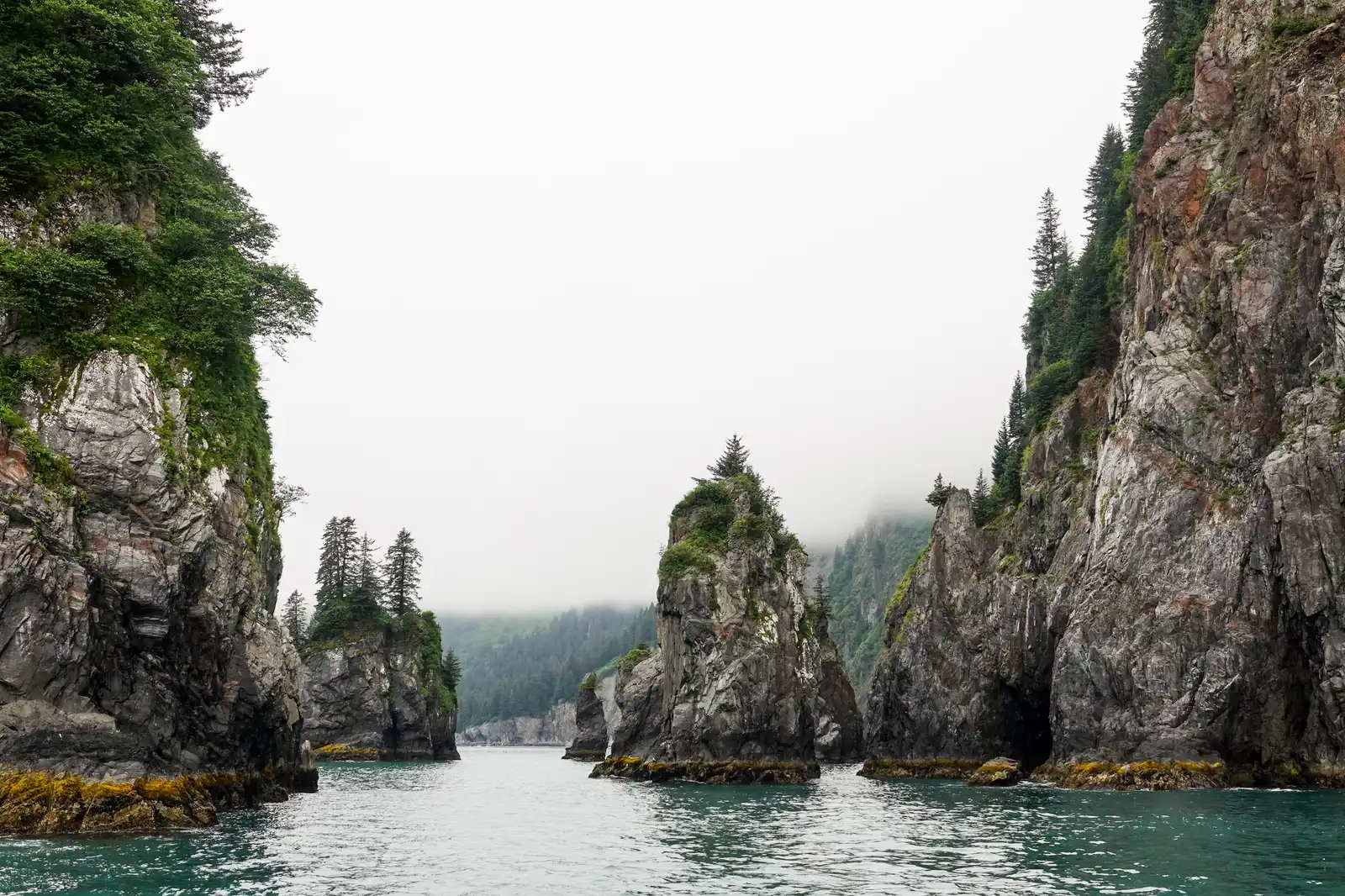
Spire Cove sits near the mouth of Resurrection Bay, on the edge of Kenai Fjords National Park, far enough from Seward that the practical way in is by boat. When you arrive, the scale registers slowly. Rock columns rise directly out of the salt water, some reaching several stories above the waterline with surfaces darkened by lichen and constant salt spray.

The water runs a deep gray green, the color shifting with cloud cover and tide. Low fog is common and often settles into the upper reaches of the cove, softening the ridgeline behind the spires while leaving the foreground sharp and close. The air carries the cold mineral smell of open ocean mixed with the sharper salt of exposed rock.

This is one of the more reliably active wildlife corridors in the park. Horned and tufted puffins nest in cliff faces during summer, and Steller sea lions haul out onto the rock formations at the base of the columns, their calls carrying across the water before you spot them. Bald eagles perch at height on the spire tops while humpback whales, well known for their spectacular breaching, move through the waters right among the rock columns during summer months.

That convergence of animal activity and raw geology is hard to prepare for. The spires themselves are the product of glacial and ocean forces at work over millennia, the same forces that carved the numerous fjords moving down from the Harding Icefield and continue reshaping this coastline today.

The Visit

Getting to Spire Cove

Spire Cove has no road access. All visits begin in Seward, a small fishing town roughly two and a half hours south of Anchorage via the Seward Highway (AK 9). From downtown Seward, follow 4th Avenue south to the small boat harbor and book a tour with one of the commercial operators departing from the docks there.

The cove sits near the mouth of Resurrection Bay on the edge of the park, and half day Resurrection Bay cruises can include it when conditions and routing allow. Not every tour stops there by default so ask the operator before you book and tell your captain early that Spire Cove is a priority.

Best season and light for photography

June through early August is the most productive window. Humpback activity peaks during this stretch and boat tour options are at their widest with early morning and evening departures available from Seward.

Alaska's summer sun stays low on the horizon for much of the day and golden hour can extend for hours rather than minutes. Morning light from the east rakes across the vertical rock faces and deepens the texture of the columns in a way that midday light does not. Overcast and fog are common at Spire Cove and work well for photography by eliminating harsh shadows and keeping the water's color even and saturated.

Small details worth watching for

The rock columns show two distinct surface zones: upper sections carry dense lichen growth that has built up above the salt spray line while lower sections stay bare and wet from constant wave action. That transition point shifts with the tide and gives you a readable sense of the tidal range as you move through the cove.

Watch the base of the largest columns for Steller sea lions hauling out on any flat rock surface available. Their calls carry across the water well before you can see them clearly. Horned and tufted puffins nest in cliff face crevices through summer and are easiest to spot when they launch from ledges and head out low over the water to fish.

Kenai Fjords: Spire Cove
Find it

Kenai Fjords: Spire Cove

Earned the hard way

Insider Tips

Position yourself at the bow

On larger tour boats, the main observation decks fill up fast once the boat slows near the spires or a whale surfaces. Moving to the bow early gives you cleaner sight lines to the rock columns and room to track animal movement without competing for space along the rail.

If photography is the main goal, look for operators running smaller vessels with fewer passengers. A smaller boat can maneuver closer and hold position longer, and you'll have more of the rail to yourself throughout the approach.

Dress for the outer coast, not the harbor

The temperature at Spire Cove runs colder than Seward, and wind picks up once you clear Resurrection Bay and reach open Gulf water. A waterproof shell over a warm mid layer is the baseline, and gloves are worth bringing even in July.

A wide brimmed hat earns its place on this stretch of coast. Low angle summer sun reflects hard off the water and rain can arrive fast without much warning. One hat handles both.

Stop at Summit Lake Lodge on the drive down

Roughly halfway between Anchorage and Seward, Summit Lake Lodge sits at mile 45.5 of the Seward Highway on the north shore of Summit Lake inside the Chugach National Forest. The on-site cafe serves espresso and baked goods and the terrace looks out over the lake and the surrounding ridgeline.

The full restaurant runs dinner service only, so if you're making an early push to catch a morning departure out of Seward, stop here on the drive in and fuel up before you hit the harbor.

Lace up

Nearby Hikes

Trails worth your time when you're in the area.

hard

Harding Icefield Trail

8.2 mi/3,500 ft gain

Starting at the Exit Glacier area, this trail climbs 3,500 feet through cottonwood and alder forest, open alpine meadow, and boulder terrain to the edge of the Harding Icefield. The icefield covers roughly 700 square miles and feeds 38 named glaciers, and the view from the top gives a direct sense of the scale of the glacial system still active across the park. Snowpack can persist on the upper trail into early July.

View on nps.gov
easy

Exit Glacier View and Overlook Loop

2.2 mi/321 ft gain

Historical markers along this 2.2 mile loop document Exit Glacier's retreat decade by decade and the trail moves through cottonwood forest to a close view of the glacier face and outwash plain below. This is the only road accessible section of Kenai Fjords National Park and makes for a solid first stop before committing to the Harding Icefield Trail above.

View on alaska.org
hard

Mount Marathon

4.5 mi/2,923 ft gain

The hikers trail gains nearly 3,000 feet over 4.5 miles starting directly behind downtown Seward, climbing through spruce and hemlock forest before breaking into an open alpine bowl with wide views of Resurrection Bay and the surrounding Kenai Mountains. Loose rock and exposed ridgeline define the upper terrain and the descent requires just as much attention as the climb.

View on alaska.org
hard

Caines Head Trail

14.6 mi/2,749 ft gain

This out and back route follows the western shore of Resurrection Bay south from Lowell Point through old growth coastal rainforest and tidal beach before climbing to Fort McGilvary, an abandoned World War II coastal defense installation set 650 feet above the water. The three mile beach section between Tonsina Point and North Beach is only passable at a tide of plus 3 feet or lower so check tide tables before leaving the trailhead.

View on dnr.alaska.gov
hard

Lost Lake Trail

13.8 mi/2,601 ft gain

The trail climbs gradually from the Seward trailhead through dense spruce and hemlock forest for the first few miles before opening into subalpine meadows and eventually reaching Lost Lake at mile 7, a clear body of water set below a wide alpine panorama. Snow can linger above mile 4 into mid July and the trail connects at the lake to the Primrose Trail for a one way shuttle option.

View on fs.usda.gov
On the way

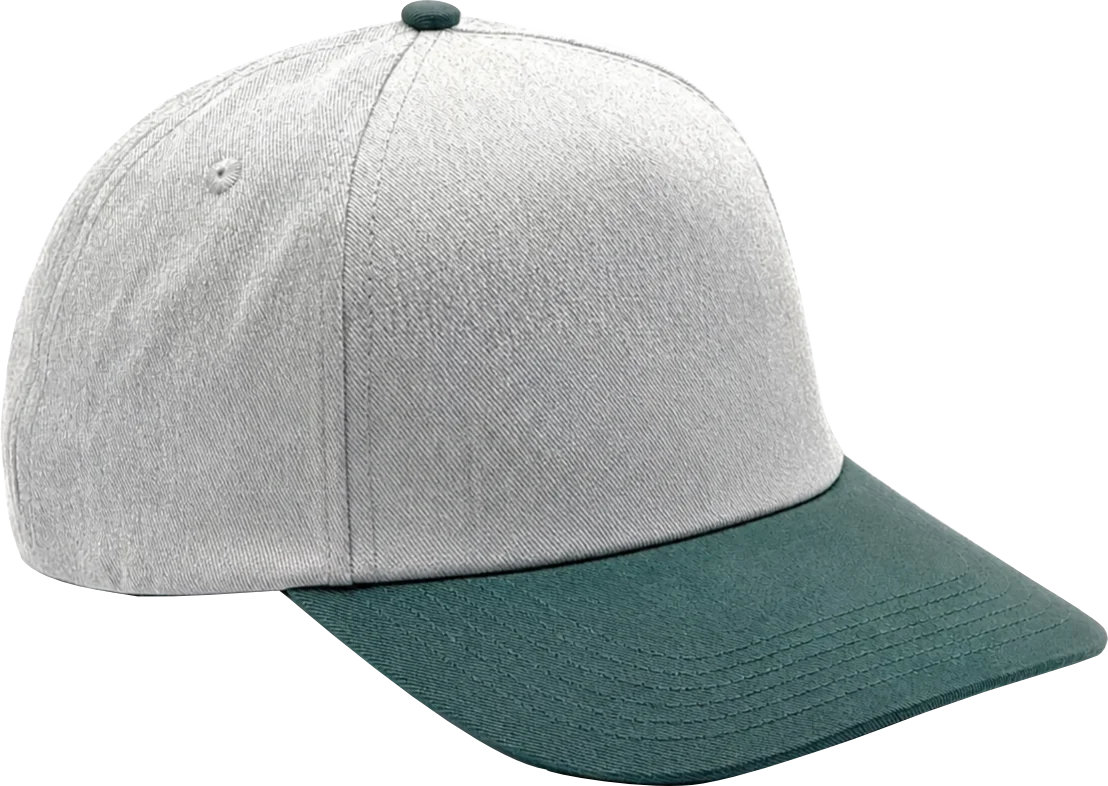
Kenai Fjords National Park Hat

We're still working on this one. Get notified the moment it's ready. 100% of the profit goes straight to the National Parks.

Kenai Fjords National Park HatComing Soon
Why it matters

Protecting Kenai Fjords

Climate change is the most significant long term threat to the resources at Kenai Fjords, and the outer coast where Spire Cove sits reflects that pressure directly. Temperatures in Alaska are increasing at twice the global average, and many of the park's glaciers are experiencing rapid retreat. That glacial retreat reshapes coastal ecosystems by changing how freshwater enters the ocean, with retreating ice altering the flow of sediment and nutrients into coastal waters.

A Natural Resource Condition Assessment conducted by the National Park Service found that glaciers at Kenai Fjords were given a condition status of significant concern, while marine bird colonies and coastal geomorphology lacked sufficient data to even assign a status. During the 2014 to 2016 marine heatwave, researchers estimate that roughly 4 million common murres died across Alaska, one of the largest single species wildlife mortality events documented in modern times. The wildlife corridors at places like Spire Cove depend on the health of the full marine system around them.

Humpback whales spend summers in these waters feeding on forage fish like herring, a food web that runs from plankton upward through every species you see from the boat. Protecting that chain means protecting the conditions that make Spire Cove what it is, not just for visitors today but for the ecosystems that will still be working through these waters long after.

That's why Rainier Hat Co. exists as more than a gear company. Every hat we make is a direct funding vehicle for the parks, and 100% of profit from the Kenai Fjords hat goes straight to the National Parks. Buying one isn't a souvenir purchase. It's a concrete contribution to the places that make trips like this possible.
Frequently Asked Questions

What is Spire Cove?

Spire Cove is a cove near the mouth of Resurrection Bay on the edge of Kenai Fjords National Park. Dozens of rock columns rise directly out of the sea, some reaching several stories above the waterline. It sits within one of the more active wildlife corridors in the park, with humpback whales, Steller sea lions, horned and tufted puffins, sea otters, and bald eagles all regularly present during summer months.

How do the rock spires at Spire Cove form?

The columns are sea stacks, a coastal landform created by wave erosion over long stretches of time. Wave action gradually carves into headlands, forming caves and then arches. When an arch collapses, it leaves behind an isolated rock pinnacle. The same storm surges, tides, and glacial and tectonic processes that shape the rest of Kenai Fjords' more than 400 miles of coastline are at work here.

Can I drive to Spire Cove?

No. Spire Cove has no road access. The only practical way in is by boat, departing from Seward. Most of Kenai Fjords National Park's outer coast falls into this category, which is why a boat tour is the standard way to experience it.

How do I get to Seward from Anchorage?

Seward sits roughly two and a half hours south of Anchorage via the Seward Highway (AK 9). The drive follows Turnagain Arm before cutting through the Kenai Mountains, and it's one of the more scenic stretches of road in Alaska. All boat tours to Spire Cove depart from the small boat harbor in Seward.

Is Spire Cove a guaranteed stop on every tour?

Not always. A stop at Spire Cove is not on the formal itinerary for all tours and can be by request only. Let the captain and crew know early that you want to go, and they'll do their best to work it into the route if time and conditions allow.

Which tour operators run trips out of Seward?

Several operators run boat tours from Seward's small boat harbor. Major Marine Tours and Kenai Fjords Tours are the two largest and most established, offering tours ranging from 4 to 8.5 hours. Smaller operators like Seacor Tours, Seward Wildlife Tours, Northern Latitude Adventures, and Sunny Cove Kayaking also run trips, some on smaller vessels with fewer passengers.

What tour length should I book to have the best chance of reaching Spire Cove?

Spire Cove sits near the mouth of Resurrection Bay, and some half day Resurrection Bay cruises list it as a highlight when conditions and routing allow. Longer 6 to 8.5 hour national park cruises give you more time for tidewater glaciers and outer coast wildlife, but they are not the only way to reach Spire Cove. Ask the operator whether the days route includes Spire Cove before you book.

When is the best time of year to visit Spire Cove?

Boat tours out of Seward run from mid March through late September, with May through August offering the widest range of departures. June through early August is the most productive window for wildlife, especially if humpback whale activity is a priority. Humpbacks are most active here from mid May through mid August.

What wildlife can I expect to see at Spire Cove?

Humpback whales are known to breach among the rock columns during summer months. Steller sea lions haul out onto flat rock surfaces at the base of the spires, and their calls carry across the water well before you see them. Horned and tufted puffins nest in cliff face crevices through summer and can be spotted launching from ledges low over the water. Bald eagles perch at height on the spire tops and sea otters are regularly present in the surrounding waters.

Why do humpback whales breach?

The reason isn't fully understood. In Alaska, breaching may serve as a form of communication, a way to stun fish, or simply be a physical behavior with no clear survival function. Humpbacks are well known for this behavior and are one of the most likely whale species to breach during a summer tour in Kenai Fjords.

What other whale species might I see in Kenai Fjords?

Humpbacks and orcas are the most commonly sighted whales in the park. Gray whales pass through in spring during their northward migration. Fin whales and minke whales are also present but sightings of those species are less frequent.

Are there two types of puffins at Spire Cove?

Yes. Both horned puffins and tufted puffins nest along the outer coast of Kenai Fjords during summer. They use crevices in cliff faces and are easiest to spot when they launch off ledges and fly low over the water headed out to fish.

Is seasickness a concern on these tours?

It can be. The route to Spire Cove usually stays in or near Resurrection Bay, where conditions are generally calmer than exposed Gulf of Alaska water, but boat motion can still be a factor. If you are prone to motion sickness, take medication like Dramamine or Bonine before boarding and confirm timing with your operator. Morning departures often run in calmer conditions.

What should I wear on the boat?

The outer coast runs colder than the harbor in Seward, and wind picks up once you clear Resurrection Bay. A waterproof shell over a warm mid layer is the baseline. Gloves are worth bringing even in July. A wide brim hat earns its place too since low angle summer sun reflects hard off the water and rain can arrive fast.

Are meals included on boat tours?

It depends on the operator and tour length. Most full day cruises with Major Marine Tours and Kenai Fjords Tours include a deli style lunch served onboard. Shorter tours typically offer a snack bar rather than a full meal. Check with your specific operator when you book.

Can I photograph the spires and wildlife from the boat?

Yes, and a telephoto lens is worth having. The boat moves through and around the columns so you get multiple angles on the rock formations. For wildlife, keep your camera ready at all times since whale breaches and puffin launches are quick. Overcast and foggy conditions, which are common at Spire Cove, actually work well for photography by eliminating harsh shadows and keeping the water's color even.

What is the light like for photography at Spire Cove?

Alaska's summer sun stays low on the horizon for much of the day and golden hour can extend for hours. Morning light from the east rakes across the vertical rock faces and deepens the texture of the columns. Overcast and fog are common at Spire Cove and work well for photography by eliminating harsh shadows and keeping the water color even and saturated.

Should I try to get a smaller boat tour?

For photography and wildlife viewing, smaller vessels have real advantages. A smaller boat can maneuver closer to the columns, hold position longer, and gives you more of the rail to yourself. Operators like Northern Latitude Adventures, Seacor Tours, and Seward Wildlife Tours run smaller vessels if a more intimate experience is the priority.

Is there anything to do near Seward before or after the tour?

Seward is a small fishing town with a solid harbor area. The Alaska SeaLife Center on the waterfront is worth time both before and after a tour. If you're driving from Anchorage, Summit Lake Lodge at mile 45.5 of the Seward Highway sits on the north shore of Summit Lake inside the Chugach National Forest and makes a good midpoint stop with espresso and food.

Are there hiking options near Seward or Kenai Fjords?

Yes. The Exit Glacier area is the only road accessible section of the park and offers trails ranging from a paved walkway to the 8.2 mile Harding Icefield Trail, which climbs 3,500 feet to the edge of the icefield that feeds 38 named glaciers. Mount Marathon behind downtown Seward gains nearly 3,000 feet in 4.5 miles. The Caines Head Trail runs south along Resurrection Bay to a World War II era coastal defense installation.

Can I kayak at Spire Cove?

Kayaking near the sea stacks is possible and some visitors describe it as among the more memorable ways to experience the cove up close. Operators like Sunny Cove Kayaking run guided trips that combine boat travel to the outer coast with kayaking near glaciers and coastal formations. Given the exposure to open Gulf swell, this is not a self-guided undertaking.

Does fog affect the experience at Spire Cove?

Low fog is common and often settles into the upper reaches of the cove, softening the ridgeline behind the spires while leaving the foreground sharp and close. For most visitors it adds to the atmosphere rather than detracting from it. Wildlife and the sea stacks themselves remain fully visible even on heavy overcast days.

Is there an entrance fee for Kenai Fjords National Park?

There is no entrance fee to access Kenai Fjords National Park itself, but the boat tours operated by private companies carry their own ticket prices. The Exit Glacier area, the only road accessible section of the park, is free to visit.

How is climate change affecting Spire Cove and Kenai Fjords?

Temperatures in Alaska are rising at roughly twice the global average, and many of the park's glaciers are retreating rapidly. Glacial retreat changes how freshwater, sediment, and nutrients enter coastal waters, which reshapes the marine food web that supports everything from forage fish to humpback whales. A National Park Service condition assessment rated the park's glaciers as a significant concern.

How does buying a Kenai Fjords hat from Rainier Hat Co. support the park?

Rainier Hat Co. sends 100% of profit from the Kenai Fjords hat directly to the National Parks. It's not a souvenir purchase. It's a direct funding contribution to the places and ecosystems that make trips like this possible.